
Healthy eating becomes an adventure when play meets the kitchen table. With Mr. Cutesy Myllo as your family’s guide, you can turn colourful fruits and vegetables into a fun, creative learning game that can help children see food in a new and engaging way.
This activity is perfect for home, school, or even workplace family days. All you need is curiosity, a few fresh ingredients, and a sense of fun.
The Activity: Building Myllo with Real Veggies and Fruits

Step-by-Step Guide: Gather Your Materials
Collect the vegetables and fruits that make up Mr. Cutesy Myllo:
1. Gather Your Materials
Collect the fruits and vegetables that make up Mr. Cutesy Myllo:
🍍 1 pineapple
🍅 1 tomato
🥕 2 carrots
🥝 2 kiwis
🍎 1 red apple
🍓 2 strawberries
🥬 2 celery stalks
2. Set the Stage
Arrange the fruits and vegetables on a large, clean table. Place your Mr. Cutesy Myllo plush toy nearby as a friendly visual guide. Children love comparing the real ingredients with their toy’s bright colours.
3. Interactive Play
Invite your children to match each part of Myllo to the corresponding fruits and vegetables.
Encourage them to touch, smell, and describe what they see, bright reds, leafy greens, shiny yellows. These sensory moments can help foods feel more familiar
4. Educational Moment
As your children handle each fruit or vegetable, chat about its benefits in simple, fun ways.
For example:
- Tomatoes are botanically a fruit, even though we usually eat them as a vegetable.
- Celery contains a lot of water, which helps with hydration.
- Apples are often included as part of a balanced diet for school days.
This approach builds both curiosity and understanding — essential ingredients for lifelong healthy habits.
5. Creative Challenge
Let your little ones get artistic. Encourage them to build their own version of Myllo, arranging fruits and vegetables into funny shapes or faces.
This hands-on creativity supports fine motor skills, shape recognition, and imagination, all while keeping vegetables centre stage.
6. Lifestyle Integration
Wrap up your play session with a family chat. Ask:
- “Which fruits or veggies did you like most today?”
- “Which new ones shall we try next time?”
These small conversations help children connect food with positive memories and may increase the chance they’ll ask for those foods again.
Building Myllo with Real Fruits and Vegetables
See how easy and enjoyable it can be to bring this activity to life with your family. It’s a hands-on, educational, and laughter-filled way to spark healthier habits at home or school.
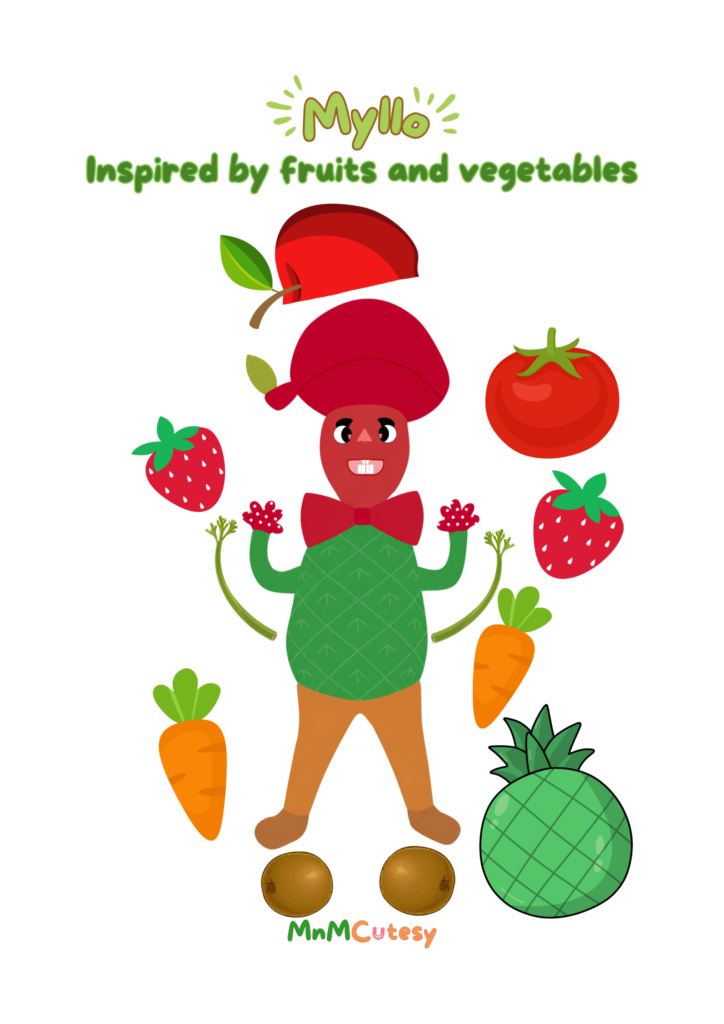
Building Myllo with Real Veggies and Fruits: This handy guide shows you just how simple and enjoyable it can be to introduce this activity to your family. It’s a fun and engaging way to introduce simple healthy habits for everyone at home, at school, and at work.
Congratulations, parents!
You’ve successfully assembled Mr. Cutesy Myllo alongside your little ones using a variety of colourful fruits and vegetables. Now that he’s come to life, let’s explore the health benefits each ingredient brings to the table.
Step 1 (Hat)
🍎 Red Apple: Crunchy and sweet, apples are a popular fruit and count towards 5 A Day.
Step 2 (Face)
🍅 Tomato: contains vitamin C, which helps the body absorb iron from plant foods, and lycopene, the pigment that makes tomatoes red.
Step 3 (Body)
🍍 Pineapple: Sweet, juicy and tropical, pineapple contains vitamin C.
Step 4 (Arms)
🥬 Celery: Crunchy and mostly water, celery is a refreshing snack.
Step 5 (Hands)
🍓 Strawberries: Sweet and juicy, strawberries contain vitamin C and count towards 5 A Day.
Step 6 (Legs)
🥕 Carrot: Crunchy and naturally sweet, carrots contain beta-carotene, which the body turns into vitamin A. Vitamin A helps maintain normal vision.
Step 7 (Feet/Shoes)
🥝 Kiwi: Tangy and juicy, kiwi fruit is a good source of vitamin C.
Why This Activity Builds Better Habits
A small UK study found that 62 three- and four-year-olds who played with fruit and vegetables tried significantly more of them afterwards.
- Three Test Groups. One group played directly with real produce by squashing and shaping items like bananas, tomatoes, and broccoli to recreate pictures from The Very Hungry Caterpillar. A second group played with non-food craft items like pompoms and pipe cleaners, while a third group watched a researcher handle the produce without touching it themselves.
- Zero Pressure. At no point during the play sessions were the children told or encouraged to eat the food.
Activities like building Mr. Cutesy Myllo give children a chance to practise fine motor skills, shape recognition and imagination.
Share Your Creation!
Share your family’s Myllo masterpiece on Instagram, tag us @myllo_and_meluna and use #mylloandmeluna or #mnmcutesy to inspire others.
Your post might encourage another child to fall in love with fruit and veg!
Want more fun ways to build healthy habits? Subscribe to our newsletter for new activities, games, and ideas to make wellbeing a daily joy.
Closing Thoughts
Healthy living is not about perfection, it’s about small, colourful steps taken together. Every moment spent exploring, playing, or tasting something new is a victory.
Keep coming back to this page whenever you need inspiration, share it with friends and family, and keep filling your home with healthy, happy play.
FAQs
1. What age is this activity suitable for?
Always supervise closely and cut food into suitable sizes. Myllo is labelled Ages 4+.
2. What if my child won’t eat the vegetables?
That’s perfectly fine. The aim is to build familiarity and comfort first. With repeated exposure and positive experiences, many children begin to try the foods naturally.
3. Can this be done at school or nursery?
Yes. It’s an excellent group activity that encourages teamwork, sensory play, and healthy discussions about food.
4. How does this help my child’s development?
Does this activity help my child’s development? Handling, naming and talking about fruit and vegetables is a gentle way to build familiarity with food. Every child is different, so follow your child’s lead and keep it relaxed.
Healthy Eating for Kids: A Fun Solution for Vegetable Struggles>>
I created this simple game because I believe choice, not pressure, is what stays with a child. I hope it’s something they remember and one day pass on to their own children.
